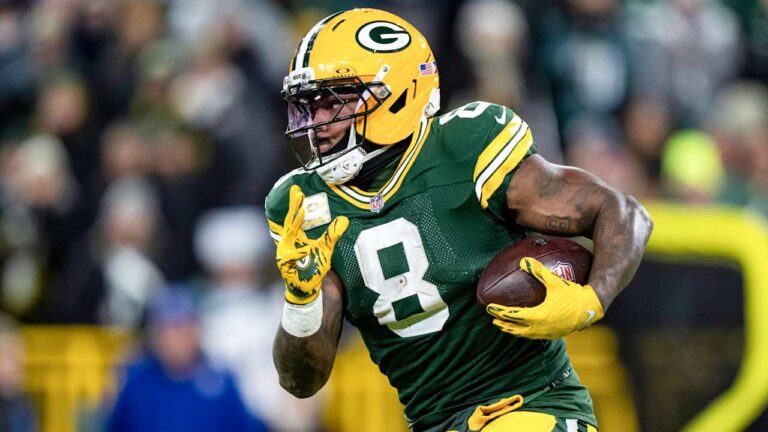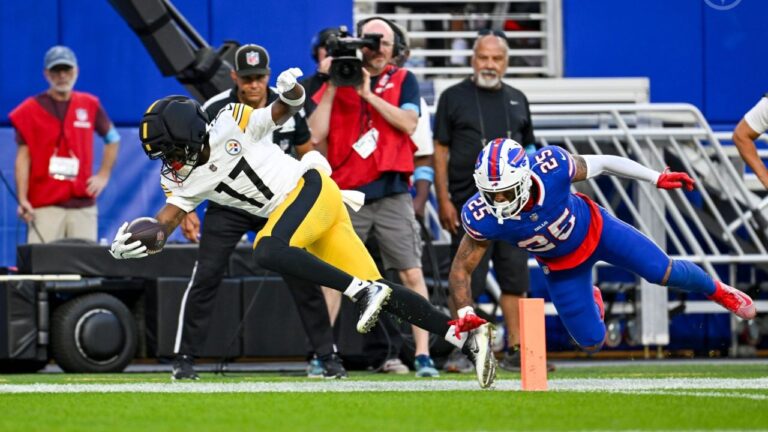
Most managers play dynasty exactly like redraft fantasy football. They obsess over week-to-week points and completely miss the actual game being played. Dynasty is a value economy first and a fantasy football game second.
If you want to build a sustainable championship window, you have to treat players as appreciating or depreciating assets. Here is exactly how focusing on roster equity builds super teams.
Dynasty Fantasy Football Strategy
Introduction: Understanding Roster Equity
Roster equity is the total market value of your team. It is not just your starting lineup. It is the sum of all your assets and their future liquidity.
The biggest trap in dynasty is focusing strictly on the scoreboard. If you do that, you end up holding aging veterans until their trade value hits zero. You might win some games early, but your roster is slowly dying underneath you. You are bleeding market equity without realizing it.
You need to prioritize what dynasty sharps call “process over players”. A redraft mindset asks who scores more this Sunday. A dynasty mindset asks who will be worth more a year from now.
The Quarterback Divide
For quarterbacks, you absolutely must separate them by archetype before evaluating their timeline.
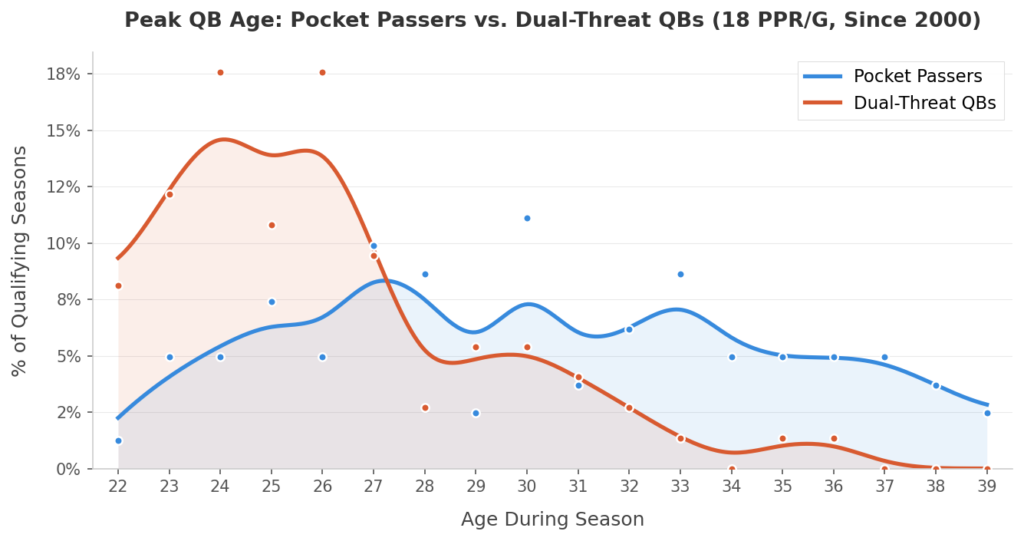
- Pocket Passers: These guys average a peak age of 30.6. They are the ultimate safety net, insulating your roster value well into their 30s.
- Dual-Threat QBs: This is where people get into trouble. Their average peak age is just 26.1. That is a massive 4.5-year gap compared to pocket passers. For rushing QBs, the value cliff hits hard and fast.
The data shows that QB rushing production drops by roughly 66% between ages 22 and 30, and plummets by 80% by age 33. Once the mobility is gone, the elite fantasy ceiling vanishes with it. You have to sell the legs before they get heavy.
A simple heuristic you can apply instantly to any roster: if a player is within 18 months of their positional age cliff, they are a mandatory sell candidate unless they are a generational talent.
Pocket passers to consider moving right now as they peak include guys like Joe Burrow who’ll turn 30 by the end of this year. I know, he’s elite when healthy, but he offers nothing with his legs for a floor and you can get a great return for him as he’s currently valued a round 2 start up pick according to Dynasty Data Lab. Right now, you can add a small kicker and tier down from him to Bo Nix or Trevor Lawrence and pick up an extra 2027 first round pick in the process.
The Running Back Age Cliff
Treating players as assets requires looking at the historical data, and the data for running backs is terrifyingly steep.
When you strip away the emotional attachment and look purely at the underlying metrics, the age cliff throws up major red flags. Here are the specific stats that scream sell:
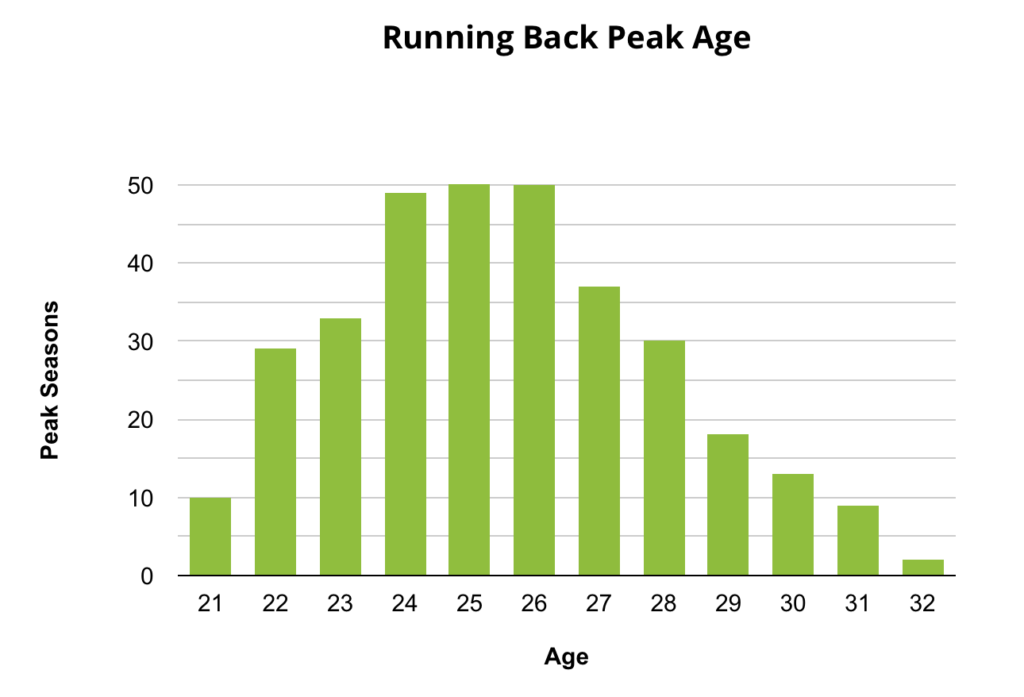
- The New Peak: Since 2016, the average age for a running back’s peak fantasy season has dropped to just 24.8 years old.
- The Rapid Decline: A staggering 93.8% of all peak running back seasons occur before they turn 29.
- Plummeting Value: Historical trade data shows running backs lose 35% to 50% of their market value within 12 months of their peak season.
If you are not selling your running backs by age 27, you are losing significant equity. We want to channel our inner Leonardo DiCaprio and have a strict age cutoff when we place values on RBs. Selling them a year early instead of a year late is generally going to work out for you more often than not.
When an aging RB fails to live up to expectations, or gets injured and misses several games, their value tanks both in the trade market and in dynasty start-up ADP. A perfect example of this was Christian McCaffrey prior to 2025. People were terrified of his injury history from 2024, so he went from being a locked-in round 4 dynasty startup pick to where I was able to steal him in round 7. That’s a significant value loss!
Running backs who seem elite but should be moved ASAP while you can still harvest Round 3 start-up value include guys like James Cook and Jonathon Taylor. These guys can absolutely produce in 2026, but even if they do, they aren’t going to see a value gain. Because they are getting even older and taking on that much more wear and tear, they will naturally see their value decay from here on out. Tiering down from either of these two backs to Javonte Williams, who finished top 12 last year and is playing on arguably a top 5 offense, plus an additional 2027 first, is an elite process move. You still get the RB production as a contender, but you’ve insulated yourself with a pick that will only gain value over time.
The Wide Receiver Insulation Gap
Compare the running back cliff to wide receivers, who enjoy a massive insulation gap.
- Extended Peak: The average wide receiver peak age is roughly 27.
- Value Insulation: More importantly, they maintain that peak trade value for 3.5 to 4 years longer than running backs.
- Elite Longevity: High-end receivers show no statistically significant drop in points per game until age 30.
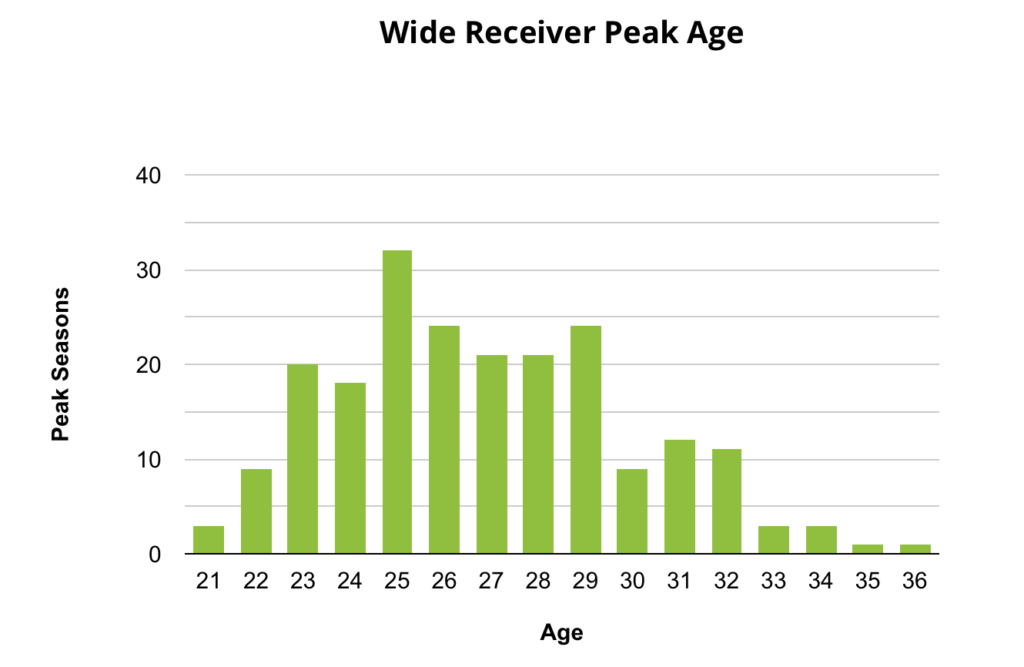
They are the bedrock of long-term roster equity. When a WR gets hurt, they generally don’t lose as much value in the trade market or in start-up ADP compared to RBs. A current example is Marvin Harrison Jr. He played through multiple injuries last year. He was valued as a top-15 dynasty WR this year, and now he still goes only a few picks after that range, as opposed to the several rounds that RBs can drop.
The Tight End Trap
Tight ends are the biggest trap in dynasty due to survivorship bias. We see anomalies like Travis Kelce or Tony Gonzalez and naturally assume the position ages incredibly well.
The reality is quite different. If you remove the top five all-time outliers, the average tight end peak age drops to just 26.8.
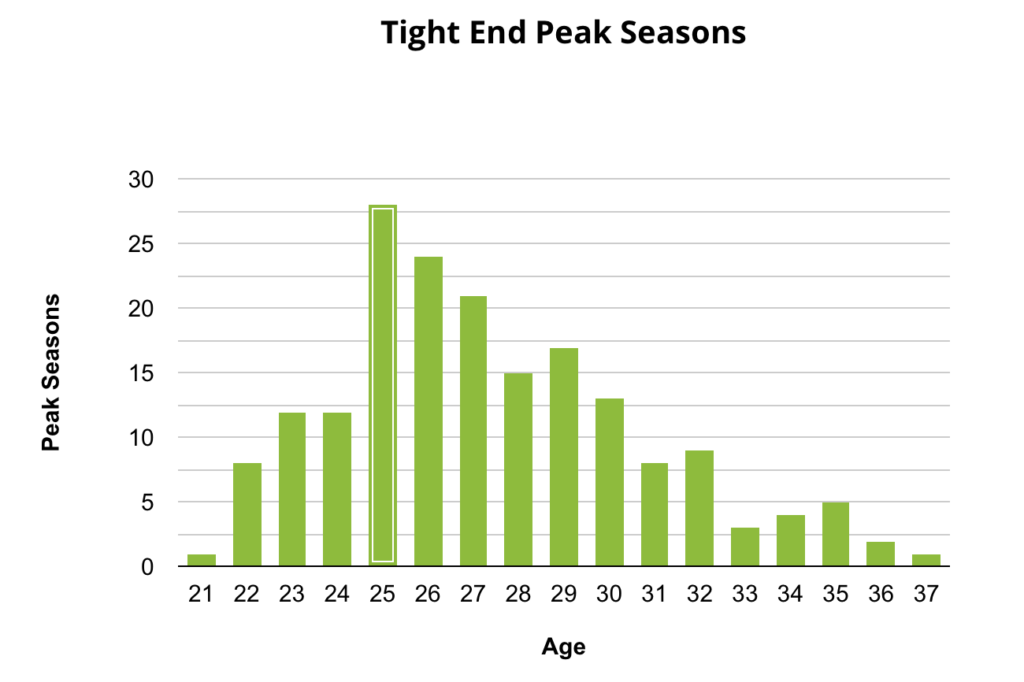
Yes, there are exceptions who produce well into their thirties. But banking on extreme outliers is a prayer, not a strategy. Build your roster around the actual data. Protect your equity, sell your running backs before the cliff, and insulate your team with wide receivers.
Draft Capital as a Stabilizer

Draft capital is your ultimate stabilizer. Future rookie picks are the only dynasty assets mathematically guaranteed to appreciate. Market data shows a future first-round pick typically rises 22% to 28% in value between January and the following rookie hype cycle.
This is exactly why it is imperative that you insulate yourself with future draft capital when trading for an older veteran. You get the points for your current run, plus the guaranteed future value to keep your equity high. An example of how this “tier down” strategy looks as of today would be like trading away DeVonta Smith for Davante Adams and a ’27 first.
The Dynasty Calendar
To balance this value game with actually scoring points, successful contenders follow a strict calendar. This prevents you from making emotional, timing-blind trades and forces you to operate with discipline.
The Equity Accumulation Phase (January to April): Forget your starting lineup entirely. Do not overpay for draft picks here because their prices are already climbing while no points are being scored. Instead, focus entirely on insulated trades. Swap aging RB2s, WR3s, and declining veterans for younger players whose value is mathematically secure.
The Market Volatility Phase (May to August): Rookie drafts and training camp hype cause massive valuation swings. You see huge rookie hype spikes and camp risers. Use this time for rookie fever arbitrage. Cash in the draft picks you already hold for elite, young, foundational pieces from managers who are blinded by the shiny new rookies.
Does this Apply to Contenders or Rebuilders? When is it Time to go All In?
These are common questions that I get, and they are totally fair questions to ask! This advice is for everyone. Understanding “the game within the game” is how you succeed long term, while everyone else is just following the latest YouTube “Buy Low, Sell High” video like a herd of sheep.
Remember, I said earlier our goal is to be either in the top three as a contender or the bottom three as a rebuilder. We never want to be stuck in the middle because then you aren’t ever winning, nor are you getting the best draft picks. In order to know where your team is at, you need to be absolutely, objectively honest with yourself. The way that I do this is by a true team audit before the season starts and giving my roster an overall score.
Here’s how it works using a 12 team Superflex Start 10 standard setting:
Quarterbacks (Score out of 10):
- 8-10: Two locked-in starters with elite weekly ceilings, verified rushing upside, and zero job-security concerns. The cheat codes.
- 5-7: One elite anchor, but your QB2 is a bridge veteran like Kyler Murray, Daniel Jones or Matt Stafford. Or you have a middle of the pack dynasty QB like Dak or Goff.
- 1-4: You are praying for spot starts and purely guessing every Sunday. This is the Jacoby Brisett/Geno Smith tier.
Running Backs (Score out of 10):
- 8-10: Multiple high-BMI backs with elite Speed Scores getting locked-in volume, plus at least one back with a pass-catching role that keeps your floor stable.
- 5-7: Your room is full of aging veterans or rotational pieces. It works for now, but the clock is ticking.
- 1-4: Zero insulated assets. You are holding backups and pure dart throws.
Wide Receivers (Score out of 10):
- 8-10: Multiple elite target earners ages 23-27 dominating in YPRR, TPRR, and WOPR, plus reliable flex depth.
- 5-7: Solid secondary pieces, but no ascending alpha who commands volume or tilts coverage.
- 1-4: Your roster is full of roster cloggers and low-volume deep threats.
Tight Ends (Score out of 10):
- 8-10: A top-tier difference-maker with elite route participation, athletic traits, a high red zone share and high YPRR/TPRR.
- 5-7: A top 7-12 guy who reliably averages around 10-12ppg. You’re not bleeding points here by wishing on a prayer.
- 1-4: You’re praying for a touchdown each week.
Tally your score total out of 40. Here’s where you land in an objective assessment:
- 32-40: Push your chips in and weaponize your depth to buy weekly difference-makers.
- 24-31: Pick a direction and commit. Either consolidate depth for a stud or liquidate for future value.
- Under 24: Start a productive struggle before the market forces you into one. Move veterans now and build around elite youth and draft capital.