In a fantasy world becoming more and more dominated by sports betting and daily fantasy, there is still something to be said for the nostalgia of traditional fantasy football.
Think back to a show like The League and how fantasy football dominated the cultural landscape of the 2010s. Could a show like that be made about daily fantasy football? Probably not. Traditional season-long fantasy football lends itself to competition, heartbreak, trash talk, and camaraderie in a way that one-off contests just don’t.
And that traditional fantasy journey, of course, starts with the draft.
The fantasy football draft is the first real opportunity to talk trash, show off your player knowledge, and convince yourself that this is finally the year you bring home the championship. If you are looking to recapture some of the magic of a traditional fantasy football season, one of the first questions your league needs to answer is simple:
Should you do a fantasy football snake draft or an auction draft?
There is no one-size-fits-all answer, but each draft format brings a completely different feel to your league.
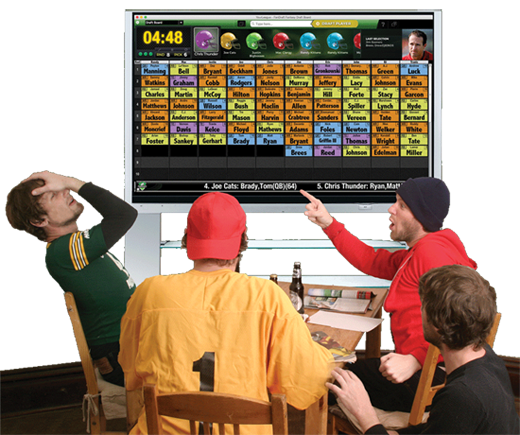
Quick Answer: Snake Draft vs. Auction Draft
A snake draft is best for most casual fantasy football leagues because it is simple, familiar, faster, and easier for every manager to follow. An auction draft is better for experienced or highly competitive fantasy leagues because every manager has a chance to draft every player, creating more strategy, flexibility, and chaos. It is the most fair and pure way to do a fantasy football draft.
If your league has newer or casual managers, choose a snake draft. If your league is full of experienced fantasy players who want more control over roster construction, choose an auction draft.
| Format | Best For | Main Strength | Main Weakness |
|---|---|---|---|
| Snake Draft | Casual or traditional leagues | Simple, familiar, predictable | Less control over specific players |
| Auction Draft | Experienced or competitive leagues | Most fair – every manager can bid on every player | More complicated and time-consuming |
What is a Fantasy Football Snake Draft?
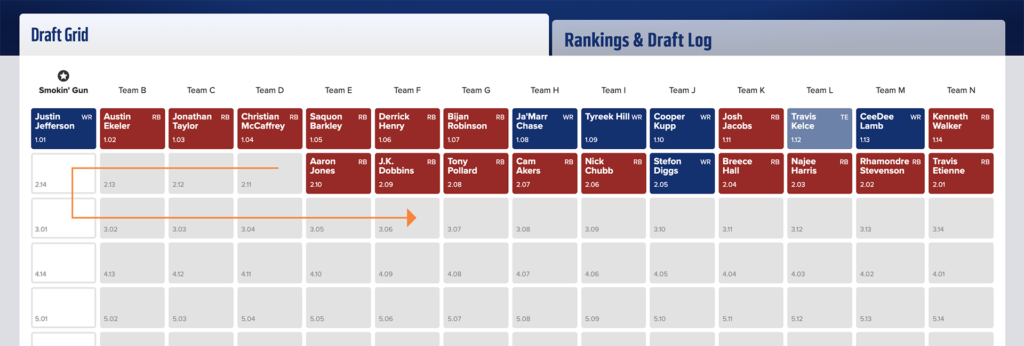
In case you are new to fantasy football or just need a refresher, a snake draft is similar to a traditional major sports draft.
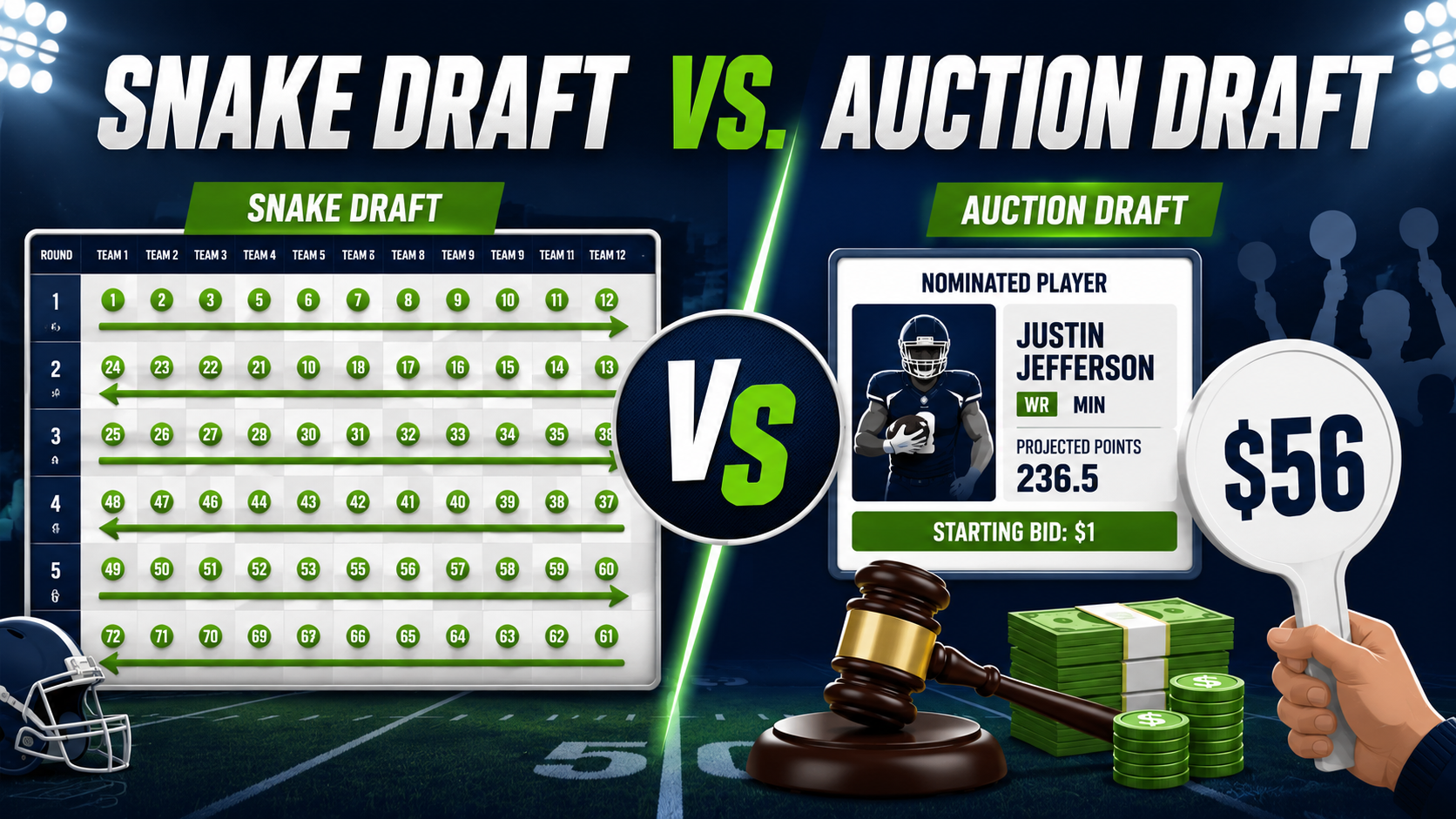
There is a set manager-by-manager draft order. Once the first round ends, the next round follows the reverse order. So, the manager with the last pick in Round 1 gets the first pick in Round 2. The draft “snakes” back and forth like this until every roster is filled.
For example, in a 12-team fantasy football snake draft, the manager picking 12th in Round 1 would also pick 13th overall to start Round 2. The manager picking first overall would have to wait until Pick 24 to make their second selection.
It is the classic fantasy football draft format for a reason. It is simple, familiar, easy to follow, and gives every manager a clear idea of when their next pick is coming.
What is a Fantasy Football Auction Draft?
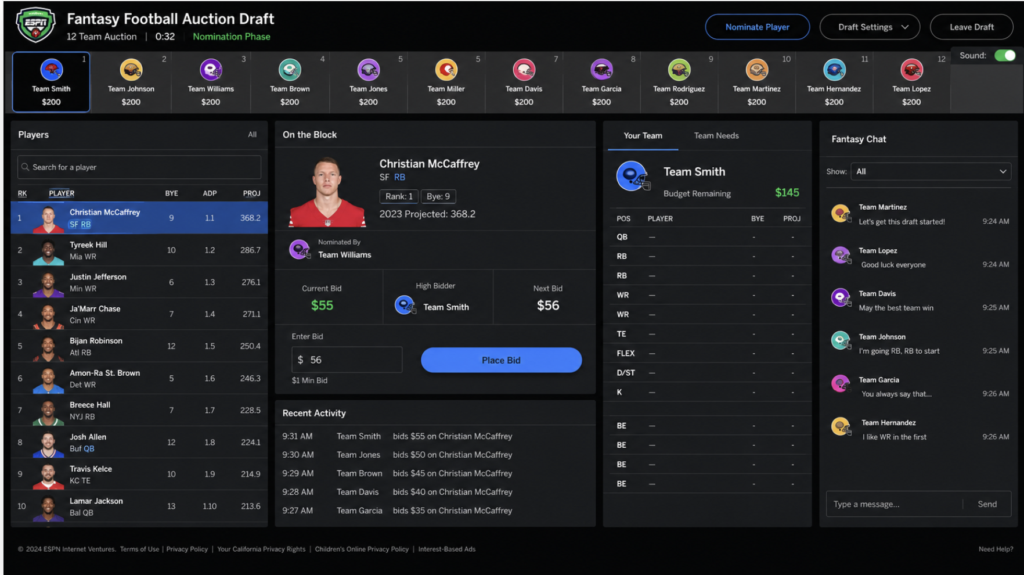
A fantasy football auction draft also follows a set manager order, but instead of simply selecting a player when your turn comes up, each manager nominates a player to be bid on.
Every team starts with the same budget, often $200. When a player is nominated, every manager has the chance to bid. The team willing to spend the most of its available budget wins that player.
That means every player is technically available to every manager. If you want Christian McCaffrey, Justin Jefferson, Ja’Marr Chase, and Bijan Robinson on the same team, you can try to make it happen. You just better be ready to pay up, because your budget will disappear quickly.
Auction drafts are less predictable, more chaotic, and often require managers to think on their feet. They reward preparation, discipline, and the ability to adjust when the draft room goes completely off the rails.
Pros and Cons of a Fantasy Football Snake Draft
Pro: Predictability
In a snake draft, you know exactly when your next pick is coming.
As soon as one pick is complete, you can start planning for your next selection. Yes, there is still the crushing heartbreak of watching your deep sleeper running back get chosen one pick before you, but a good fantasy manager always has a backup plan ready to go.
That predictability makes snake drafts easier for casual players, newer managers, and leagues that want a smoother draft night. You can build a rankings list, follow tiers, track positional runs, and make a plan without needing to constantly react to wild bidding wars.
Pro: Simplicity
Snake drafts are also easier to understand.
You pick when it is your turn. That’s it.
There is no budget management, no bidding strategy, no need to decide whether you should spend $61 or $64 on your favorite running back. For many leagues, especially “ancillary leagues” like your family or coworkers league with a mix of experienced and casual fantasy football players, that simplicity is a huge advantage.
Everyone knows the format. Everyone knows how to prepare. Everyone can jump in and have a good time.
Pro: Planning
You get to choose any available player from any position in a snake draft.
If you feel the time is right for your team to grab a wide receiver, you make that call. If it is time to draft a tight end, go for it. If it is time to get that kicker you are dreaming of, technically you can do that too. But c’mon, who takes a kicker before the final rounds?
The point is, snake drafts allow you to build your roster in a relatively controlled way. You are not at the mercy of another manager’s nomination strategy. You can follow your board, attack value when it falls, and build around your preferred fantasy football draft strategy.
Pro: Familiarity
For a lot of leagues, the snake draft simply feels like fantasy football.
It is the format most people grew up playing. It is the one casual managers understand. It keeps the draft moving, creates plenty of drama, and still allows for enough strategy to separate the prepared managers from the people drafting off last year’s rankings.
If your league wants a smooth, traditional fantasy football draft experience, the snake draft is hard to beat.
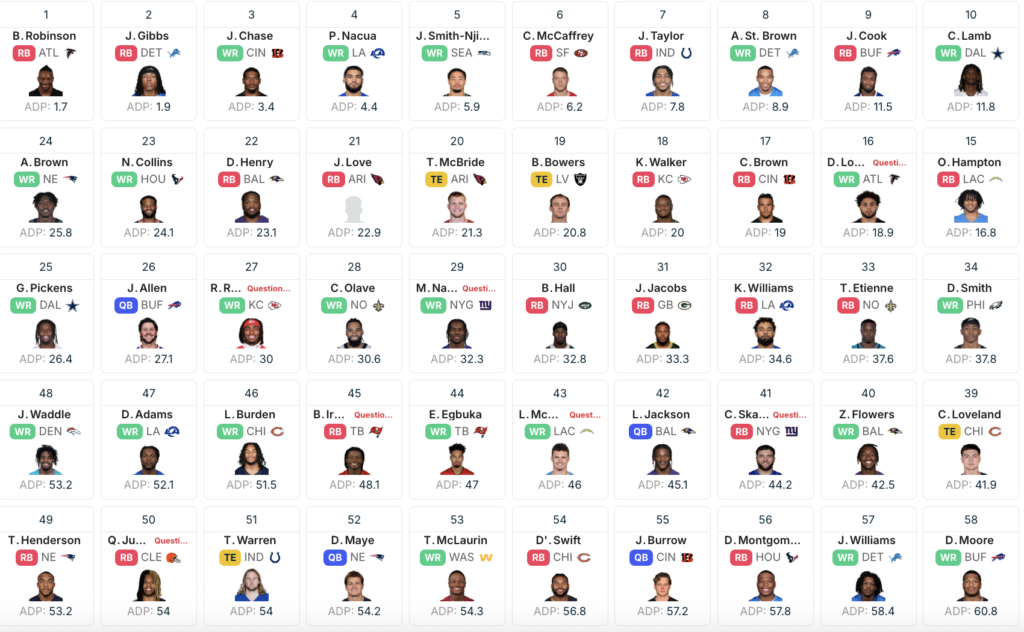
Familiarity and easier-planning make Snake Drafts more accessible for casual leagues
Con: Routine
Snake drafts can become very formulaic.
Often, managers are staring at relatively similar player rankings. While everyone has their personal preferences, too often the same 12 players go in the first round, the same types of players go in the next round, and the draft follows a predictable pattern.
That does not mean snake drafts are boring, but they can start to feel a little repetitive, especially in experienced leagues. You start to see the same type of teams getting built out of the same draft slots, with slight variations at best. The real variety often does not show up until the later rounds, when managers start reaching for sleepers, handcuffs, and upside plays.
Con: Lack of Control
This is the most frustrating part of a snake draft.
You spent hours researching and know the perfect sleeper running back you want to take. Then, two picks before your turn, that manager who thinks he is the smartest person in the room snipes him.
And there is nothing you can do about it.
You cannot bid more. You cannot fight for the player. You just have to sit there, pretend you are fine, and rage-click your backup option.
Snake drafts can leave a bitter taste in your mouth because your ability to get a player is often determined by draft slot and timing. Sometimes your guy gets back to you. Sometimes he does not. That is just part of the format.

Pros and Cons of a Fantasy Football Auction Draft
Pro: Most Fair Because Anything is Possible
In an auction draft, every player on the board is at your fingertips.
Whether you nominate the player or another manager does, if you are willing and able to spend, you can get that player on your fantasy team. That gives auction drafts a level of freedom that snake drafts simply cannot match.
You are not locked out of elite players because of your draft slot. You are not praying that your favorite target makes it back to you. You are not helpless when another manager wants the same player.
If you want him badly enough, you can go get him. You can build the team of your dreams.
As such, an auction draft is clearly the most fair format. The best drafter will be rewarded not because he was gift-wrapped the number one pick, but because he knew the best players, ideal roster constuction, and budgeting strategies.
Pro: More Strategy
Auction drafts add another layer of fantasy football strategy.
You are not just asking, “Who is the best player available?” You are asking:
- How much is this player worth?
- Is this a hot-spending room or a room full of tight buttholes?
- Based on that, should I nominate who I want, or someone for others to spend at?
- How much should I save for later?
- Am I at the end of the tier and about to pay a premium?
- Is this manager bidding me up and entering a “Big D!ck” contest? Will I be smart and back down?
- Can I get a similar player cheaper in ten minutes?
- Should I spend big early or wait for values?
That extra strategy can make auction drafts incredibly fun for competitive leagues. It rewards managers who understand player values, positional tiers, and roster construction. It also punishes managers who get too excited and blow half their budget before the draft even gets interesting.
Pro: Chaos and Engagement
Chaos can be a good thing.
Remember that deep sleeper running back you wanted? In a snake draft, you have to hope he falls to you. In an auction draft, you can throw the whole draft room into chaos by nominating him early.
Make your fellow managers scratch their heads in awe of your deep knowledge. Or make them think you have completely lost your mind. Either way, you are controlling the room.
Auction drafts create moments that snake drafts just cannot. Bidding wars, surprise nominations, managers running out of money too early, someone panic-bidding $17 on a backup tight end because they stopped paying attention — it is all part of the experience.
You also have to be locked in the entire time. This can be considered a pro and a con. In a snake, you can mentally relax if you aren’t picking for 7-10+ selections, but in an auction, you are always on the clock. That’s the beauty for most, but a curse for some.
Pro: More Control
The best argument for an auction draft is control.
If you really want a player, you have a path to get him. You may have to overpay, but at least the decision is in your hands. That makes auction drafts especially appealing for experienced fantasy football leagues where managers are tired of being boxed in by draft position.
In a snake draft, you might never have a realistic shot at certain players. In an auction draft, everyone has a chance at everyone.
Again, this makes the draft more fair, and rewards the best drafter.
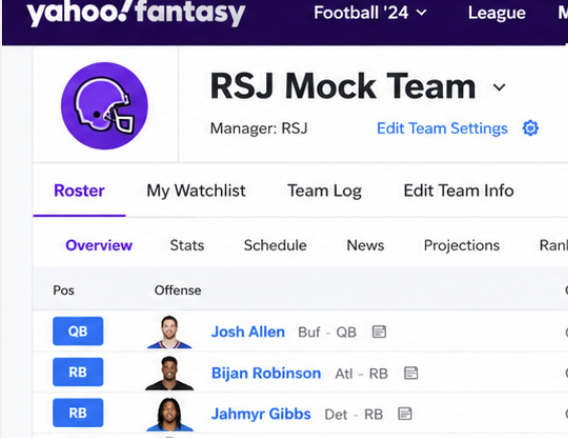
Though the rest of your team will probably suck, a Bijan + Gibbs team is possible in Auction!
Con: Over-Enthusiasm
Just like anytime I get my paycheck, as soon as I get money, I am ready to spend.
That can be a major problem in an auction draft.
You might have a few players you really like, and it is always tempting to overspend to make sure you get them on your team. That is fine if it is part of your plan. But if you lose control early, you can quickly find yourself limping through the rest of the draft, hoping to find cheap plays off the crap heap.
There is nothing worse than watching value after value come off the board while you sit there with $3 left and a roster full of regret.
You must be patient and avoid this fate.
Con: More Complicated
Auction drafts are not hard once you get used to them, but they are definitely more complicated than snake drafts.
Managers need to understand budgets, nominations, bidding strategy, and how to track value throughout the draft. That can be a lot for newer fantasy players. It can also make the draft take longer, especially if everyone is active and competitive.
For some leagues, that added complexity is the whole point. For others, it can be a headache. Know your leaguemates and the level of competitiveness, and whether that complication will be embraced or rejected.
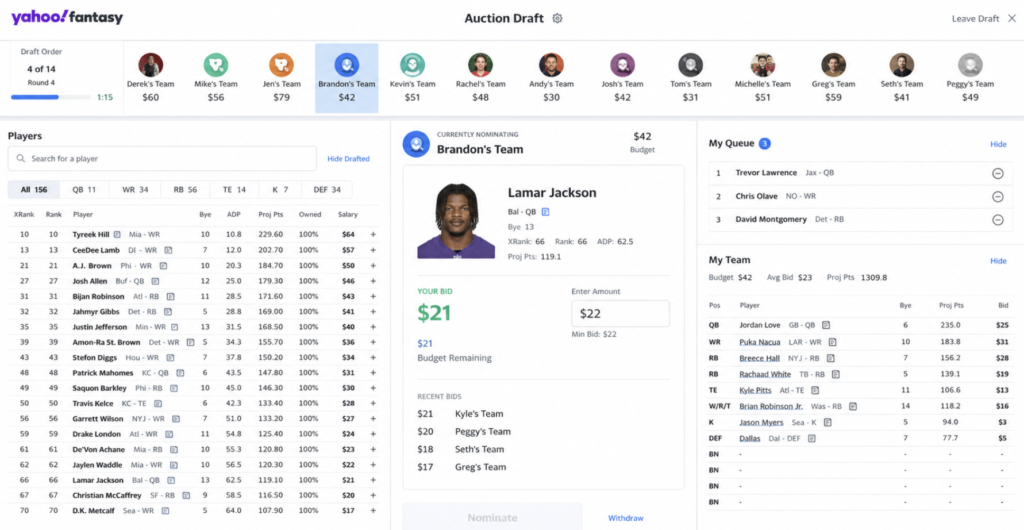
Wait, we’re only 25% through this draft and it’s been going for 2 hours?!
Con: Draft Room Fatigue and Time
Auction drafts require more focus.
In a snake draft, you can usually relax for a few picks, check your rankings, and wait for your turn. In an auction draft, every nomination matters. Every player could become a value. Every bid impacts the room.
They also take significantly longer. A snake draft is usually wrapped up within an hour. An auction draft can go for 3+ hours. Some of us love that escape. Others of us shudder at the thought of waking up to a crying baby at 4am when you’ve only just gotten home at 2am after auction-drafting for 5+ hours.
That intensity is fun, but it can also be exhausting. If your league wants a casual, beer-and-wings draft night, an auction format might be too much. If your league wants a battle of strategy and discipline, it might be perfect.

Snake Draft vs. Auction Draft: Which Is Better?
So, which fantasy football draft format is actually better?
The honest answer is that it depends on your league. The more useful answer is this:
An auction draft is the best choice if your league is fully on-board. When embraced, an auction draft is the most fair way to draft, as well as the most fun and engaging way too. In the end, it rewards the best drafter and preparation, discipline, and creativity. Auctio ndrssfts adds far more strategy, variety and chaos, and is a true experience.
For more casual fantasy football leagues, the snake draft is still the better choice.
It is easier, faster, more familiar, and keeps everyone involved without turning draft night into a math exam. If your league has casual managers, newer fantasy football players, or people who just want to draft their team, talk trash, and enjoy the season, snake is probably the way to go.
So the simple answer is this:
Casual league, go snake.
Competitive league, go auction.
Should Beginners Use a Snake or Auction Draft?
Beginners should usually start with a snake draft.
That does not mean beginners cannot handle an auction draft, but snake drafts are much easier to follow. You wait for your turn, pick a player, and move on. That simplicity matters, especially for managers who are still learning player values, roster construction, and basic fantasy football draft strategy.
Auction drafts add a lot of extra decisions. How much should you bid? When should you nominate certain players? How much money should you save? Are you getting a value, or are you just panicking because everyone else is bidding?
For a new fantasy football league, snake is the safer and smoother choice.
Once your league has a few years under its belt, moving to an auction draft can be a fun way to shake things up.
Is an Auction Draft More Fair Than a Snake Draft?
Yes, an auction draft is typically more fair than a snake draft.
In a snake draft, your draft slot matters. If you are picking at the end of the first round, you are not getting the top overall player, or even the Top-7. If your favorite player is likely to go in Round 2 and you are stuck at the wrong part of the draft board, you might never have a realistic chance to take him.
In an auction draft, every manager starts with the same budget and every manager has a chance at every player. That does feel fairer.
Of course, auction drafts also introduce different problems. A manager who overspends early can destroy their roster before the draft is halfway over. A manager who is too cautious can leave money on the table and miss out on elite players. Still, that is on the manager, not the draft slot.
As such, auction drafts are definitely the most fair why to draft. That still does not always make them the right choice.
Which Fantasy Football Draft Format is Right for Your League?
There is no perfect choice for your fantasy football draft. The best format depends on your group of managers.
If your league is newer, more casual, or simply wants the classic fantasy football experience, a snake draft is probably the better fit. It is simple, familiar, and still allows for plenty of strategy, trash talk, and heartbreak.
If your league is experienced, competitive, and looking for more control and chaos, an auction draft might be the better choice. It gives every manager a chance at every player and creates a much more unpredictable draft room.
Think about what best suits your league.
Do you want the routine progression of a snake draft, where every manager knows when they are picking and can plan accordingly? Or do you want the chaotic free-for-all of an auction draft, where every player is available and every dollar matters?
Your personal success probably will not come down to the draft format. It will come down to your preparation, flexibility, and ability to adjust when things inevitably go wrong.
Either way, you will probably have your heart broken.
That is fantasy football.
Fantasy Football Snake Draft vs. Auction Draft FAQ
Is a snake draft or auction draft better for fantasy football?
A snake draft is better for most casual fantasy football leagues because it is easier to understand, faster to run, and more familiar for most managers. An auction draft is better for experienced leagues that want more strategy and more control over which players each team can draft.
Is an auction draft more fair than a snake draft?
An auction draft can feel more fair because every manager has a chance to draft every player. In a snake draft, your draft slot can determine whether you even have a realistic shot at certain elite players. In an auction draft, everyone starts with the same budget and can choose how aggressively to spend.
Is a snake draft better for beginners?
Yes, a snake draft is usually better for beginners. The format is simple: when it is your turn, you pick one player. Auction drafts add another layer of strategy with budgets, bidding, nominations, and player values, which can be overwhelming for newer fantasy managers.
Why do people like auction drafts?
People like auction drafts because they create more freedom and strategy. You are not locked into your draft slot, and you do not have to sit helplessly while another manager takes your favorite player one pick before you. If you want a player badly enough, you can bid on him.
What is the best fantasy football draft format?
The best fantasy football draft format depends on your league. A snake draft is best for casual, traditional, or beginner-friendly leagues. An auction draft is best for competitive leagues with experienced managers who want more control and a more unpredictable draft room.
How much money do you get in a fantasy football auction draft?
Most fantasy football auction drafts use a $200 budget, but leagues can set any budget they want. The exact number matters less than making sure every manager starts with the same amount.
Does draft format matter in fantasy football?
Draft format matters because it changes the way managers build their rosters, but it does not guarantee success. Whether your league uses a snake draft or auction draft, the best managers are usually the ones who prepare, stay flexible, and adjust when the draft does not go according to plan.