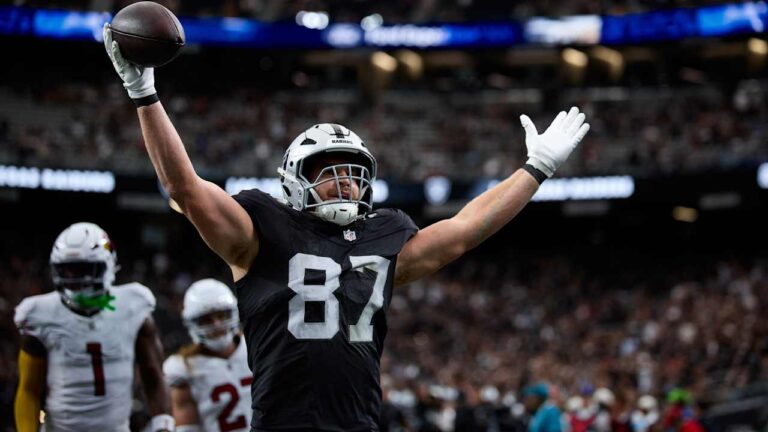
Fantasy Football Championships are won with trades.
These fantasy football trade value charts are based on The Wolf’s Rest Of Season Rankings, who finished 2nd of 172 experts in FantasyPros’ Multi-Year Draft Rankings. These charts adjust values to account for positional need, assigning values based on a 1QB, 12-team, full PPR league, where quarterbacks are generally harder to trade due to a lack of positional need, unlike in Superflex leagues.
Each week throughout the season, these values will be altered to reflect the player’s value for the rest of the season. Be sure to tune back each week throughout the season. We’ll be adjusting the chart, discussing risers & fallers, and other TEs of interest, and providing a refresher on optimal trade strategy. The trade value chart for each position is linked below.
FANTASY FOOTBALL WEEK 10 TRADE VALUE CHART: TIGHT ENDS
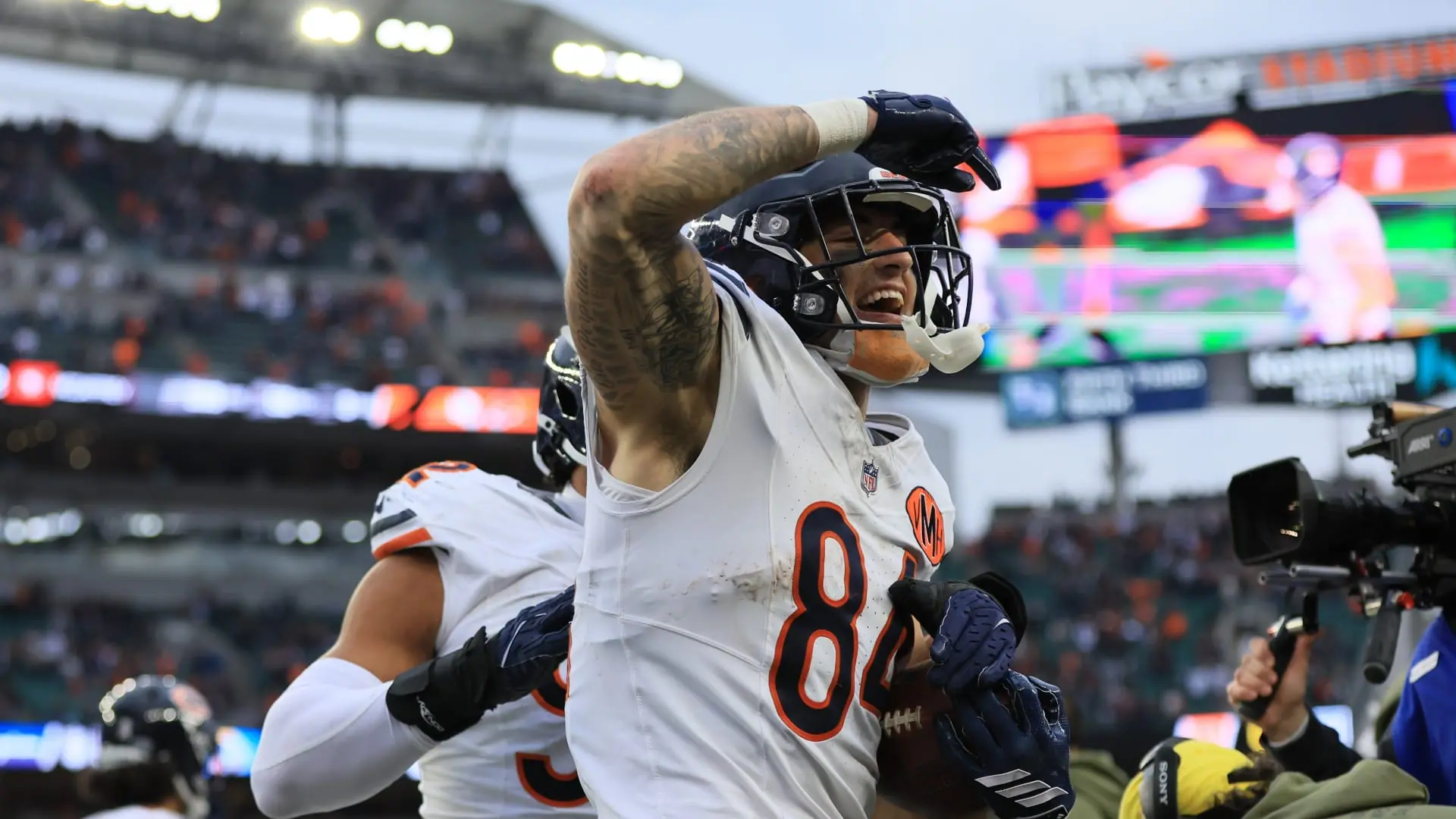
Tight End Riser – Colston Loveland (6-of-7 targets, 118 yards, 2 TD)
Loveland was steadily earning more snaps regardless, but Cole Kmet‘s early week 9 absence after suffering a concussion enabled the monstrous performance Loveland had against the Bengals.
How much of his numbers were due to the Bengals’ hyper-focus on Rome Odunze is tough to say, but many fantasy players were anxiously waiting out a breakout from the first-round rookie, and it’s going to be impossible to put the hype train away now even if Kmet is back week 10.
Tight End Faller – Tucker Kraft (2-of-3 targets, 20 yards, out with injury)
The fear is that Kraft has a torn ACL. If that’s true, the game loses a dominant TE for the rest of 2025, and opens the door for a backup who once came back from injury to find that he lost his job to then-backup Tucker Kraft.
Other Tight Ends Of Interest – Luke Musgrave (3-of-3 targets, 34 yards)
In Kraft’s stead, the next man up at TE for Green Bay is the guy who was drafted by the Packers a round before Kraft in 2023. Musgrave was given first dibs on the opportunity but was only TE21 through the first 11 weeks of his rookie season before missing the rest of the year with an abdominal injury.
Kraft took his opportunity by the reins that next year and didn’t give the job back, and it will be interesting to see how well Musgrave does with a little more experience under his belt. It’s tough to imagine what he’d have to do to convince the Packers that he’s currently the better option, considering Kraft exits as the current TE2 in fantasy, but he could at least see fantasy relevance the rest of the year if he improved his game behind the scenes.
Trade Strategy Reminders
Aim To Fill Holes On Your Roster, And Your Trade Partner’s
In general, trade offers that clearly benefit both teams’ overall value, not just your own, will make a trade partner more cooperative. However, being mindful of depth concerns with all teams involved in a trade will only increase the chance of that cooperation. Be mindful not just of weak positional depth, but a surplus of positional depth, with all your league’s rosters. You might have a shortlist of players you’d love to be able to trade for, but if what you have to offer isn’t what your trade partner needs, your offers will likely fall on deaf ears. Say you’re weak at RB, and have a surplus at WR. Teams that are strong at RB, but weak at WR, are naturally more eager to haggle.
Never Mention The Words “But The Trade Calculator Says”
Charts and calculators are a reference that can help find ideal trades, but they’re not gospel, and trying to make your potential trade partner think otherwise could shut the door on negotiations real quick. Even if your charts/calculators show the trade offer to be in your league mate’s favor, they probably have tools and references of their own, and the next time “But the trade calculator says” changes someone’s mind, maybe the first time.
Be Careful How Low-Ball Your Offers Are
Speaking of bad faith, a trade offer that is too clearly in your favor puts you in danger of potential trade partners shutting you out not just for that particular trade negotiation, but any future ones as well. It’s a great feeling to get those kinds of lopsided trade deals, but the ones that are so bad they only go through 1 percent of the time likely aren’t worth hitting the send button to begin with. At their core, fantasy players aren’t complete masochists; they just want to have fun with it, and somebody sending them insulting offers isn’t fun.
WEEK 10 TRADE VALUE CHART: TIGHT ENDS
| Rank | Player Name | Team | Value |
|---|---|---|---|
| 1 | Trey McBride | ARI | 1999 |
| 2 | Brock Bowers | LV | 1616 |
| 3 | Colston Loveland | CHI | 1103 |
| 4 | Tucker Kraft | GB | 934 |
| 5 | Dalton Kincaid | BUF | 903 |
| 6 | Tyler Warren | IND | 888 |
| 7 | Sam LaPorta | DET | 695 |
| 8 | Dallas Goedert | PHI | 686 |
| 9 | George Kittle | SF | 590 |
| 10 | Isaiah Likely | NYG | 581 |
| 11 | Juwan Johnson | NO | 455 |
| 12 | Kyle Pitts Sr. | ATL | 411 |
| 13 | Travis Kelce | KC | 270 |
| 14 | Harold Fannin Jr. | CLE | 266 |
| 15 | Pat Freiermuth | PIT | 243 |