The 2026 Fantasy Football Week 2 Trade Value Chart is built from The Wolf’s Rest of Season 2026 Fantasy Football Rankings, which finished 2nd out of 172 experts in FantasyPros’ Multi-Year Draft Accuracy rankings from 2022 to 2024. These values are tailored to a 12-team, full-PPR, 1QB league and factor in positional scarcity and real-world trade dynamics. That means quarterbacks typically carry less trade value than they would in Superflex formats, while elite running backs and wide receivers remain premium assets.
Whether you’re trying to buy low, sell high, or pull off a league-winning blockbuster, this Fantasy Football Week 1 Trade Value Chart is designed to help you make smarter deals. We’ll update player values every week based on rest-of-season outlooks, highlight the biggest risers and fallers, break down key trade targets, and share trade strategy tips to help you stay ahead of your league mates. Use the position-specific charts below to find fair trade offers and gain an edge throughout the 2026 fantasy football season.
FANTASY FOOTBALL WEEK 2 TRADE VALUE CHART: QUARTERBACKS
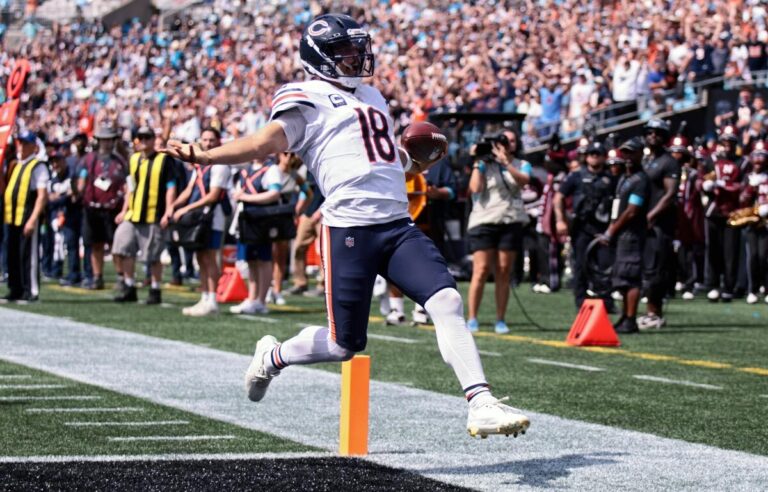
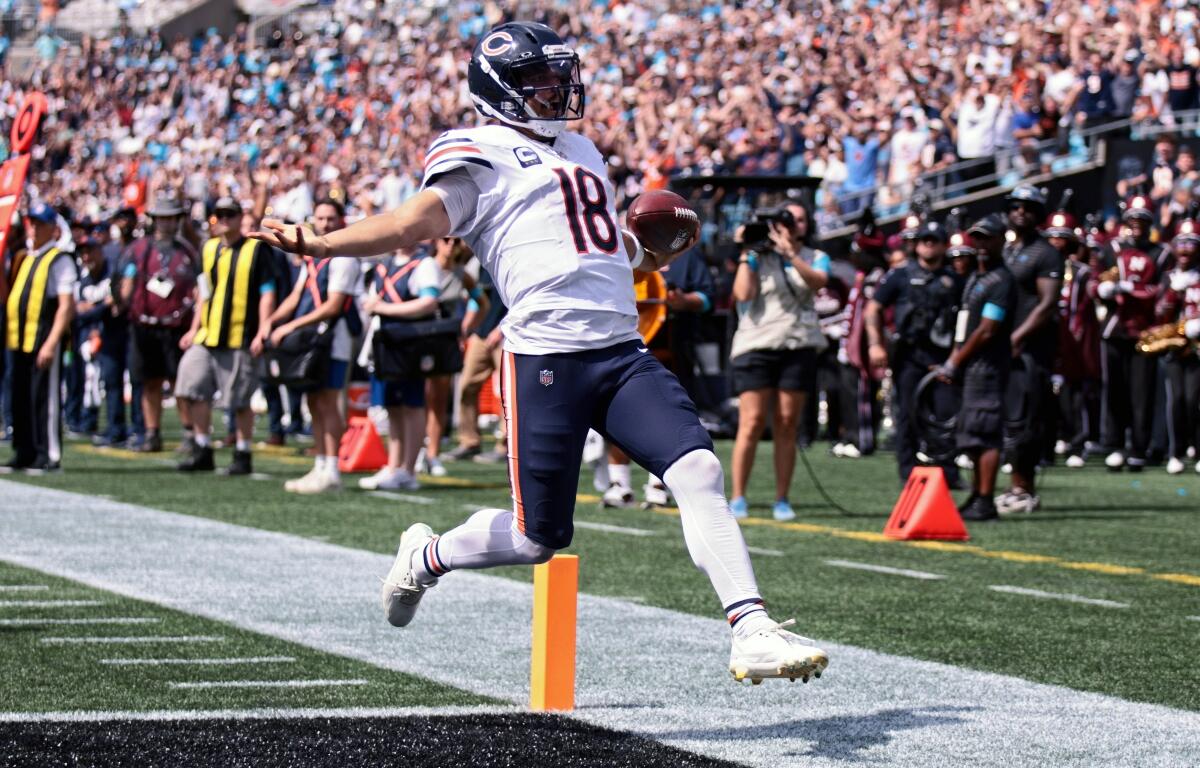
Quarterback Riser – Caleb Williams (at CAR, 21/29 for 269 yards and 2 TDs, 10 carries for 65 yards and 2 TDs)
Caleb Williams shoots up our Rest of Season Rankings after a shootout with the Carolina Panthers, where he dominated the stat sheet with his arms and his legs. The Bears’ point total and Williams’ rushing production may not be sustainable, but the team’s overall offensive success and aura may not slow down.
Everyone expected the Bears to be good offensively but not 60-burger good and in redraft formats where trading QBs can be difficult, Williams may have the fantasy momentum right now to return something solid. If you drafted him as your QB2 now may be the time to see if a weak link on your squad can be patched, or even a decent spot at another position bolstered.
Quarterback Faller – Drake Maye (at SEA, 23/33 for 178 yards, 1 TD and 3 INTs, 7 carries for 47 yards)
The Patriots came into the year with a thick cloud of “Strength Of Schedule” that was always going to hover over their 2025 success if they could come out winning through their 2026 season, with the 6th-hardest strength of schedule (.531 combined 2025 winning percentage of their opponents). Instead, continuing from last year’s Super Bowl, the Seahawks made Drake Maye look very human and cast doubt that this may be one bad week, and perhaps he is a good buy-low candidate. That may still be the case, especially for the next month or so without AJ Brown, as Maye can still get fantasy production on the ground and just faced one of his most testing defensive matchups. When Brown returns we could get some games where Maye goes off for high-end fantasy QB1 numbers but the question will remain how many.
Other Quarterbacks Of Interest – Tyler Shough (at DET, 35/56 for 410 yards, 3 TDs and 2 INTs, 4 carries for 8 yards)
Late season rookie success in 2025 led to hope that Shough could take the next step this year and though he finished as QB6 this week, the stats behind that fantasy success aren’t sticky. Going to overtime against the Lions added to more throws along with a negative script, and though there may be plenty more negative scripts for the Saints this season, another 56 throws shouldn’t be expected. The league average pass attempts for week 1 was 34.5, which would correlate to only 252 yards passing and 2 TDs instead of three, and a very average fantasy day. If Jordyn Tyson can come back healthy mid-season there may be an argument for Shough as a legit candidate to flirt with top-12 fantasy QB numbers but in week 1, it wasn’t happening without a very unsustainable amount of volume.
Fantasy Football Trade Strategy Tips
Trade for Team Needs, Not Just the Best Value
In general, trade offers that clearly benefit both teams’ overall value, not just your own, will make a trade partner more cooperative. However, being mindful of depth concerns with all teams involved in a trade will only increase the chance of that cooperation. Be mindful not just of weak positional depth, but also of surplus positional depth across your league’s rosters. You might have a shortlist of players you’d love to be able to trade for, but if what you have to offer isn’t what your trade partner needs, your offers will likely fall on deaf ears. Say you’re weak at RB and have a surplus at WR. Teams that are strong at RB but weak at WR are naturally more eager to haggle.
Why Trade Calculators Aren’t the Final Word
Charts and calculators are a reference that can help find ideal trades, but they’re not gospel, and trying to make your potential trade partner think otherwise could shut the door on negotiations real quick. Even if your charts/calculators show the trade offer to be in your league mate’s favor, they probably have tools and references of their own, and the next time “But the trade calculator says” changes someone’s mind may be the first time.
How to Avoid Low-Ball Trade Offers
Speaking of bad faith, a trade offer that is too clearly in your favor puts you in danger of potential trade partners shutting you out not just for that particular trade negotiation, but any future ones as well. It’s a great feeling to get those kinds of lopsided trade deals, but the ones so bad they only go through 1 percent of the time likely aren’t worth hitting the send button in the first place. At their core, fantasy players aren’t complete masochists; they just want to have fun with it, and somebody sending them insulting offers isn’t fun.
FANTASY FOOTBALL WEEK 2 TRADE VALUE CHART: QUARTERBACKS
| Rank | Player Name | Team | Value |
|---|---|---|---|
| 1 | Josh Allen | BUF | 1451 |
| 2 | Lamar Jackson | BAL | 1174 |
| 3 | Caleb Williams | CHI | 966 |
| 4 | Trevor Lawrence | JAC | 940 |
| 5 | Jalen Hurts | PHI | 793 |
| 6 | Joe Burrow | CIN | 740 |
| 7 | Brock Purdy | SF | 654 |
| 8 | Drake Maye | NE | 646 |
| 9 | Jaxson Dart | NYG | 608 |
| 10 | Jayden Daniels | WAS | 524 |
| 11 | Justin Herbert | LAC | 494 |
| 12 | Dak Prescott | DAL | 479 |
| 13 | Patrick Mahomes II | KC | 471 |
| 14 | Matthew Stafford | LAR | 389 |
| 15 | Jared Goff | DET | 384 |
| 16 | Tyler Shough | NO | 351 |
| 17 | Jordan Love | GB | 346 |
| 18 | Bo Nix | DEN | 341 |
| 19 | Malik Willis | MIA | 241 |
| 20 | Baker Mayfield | TB | 238 |
| 21 | Bryce Young | CAR | 204 |