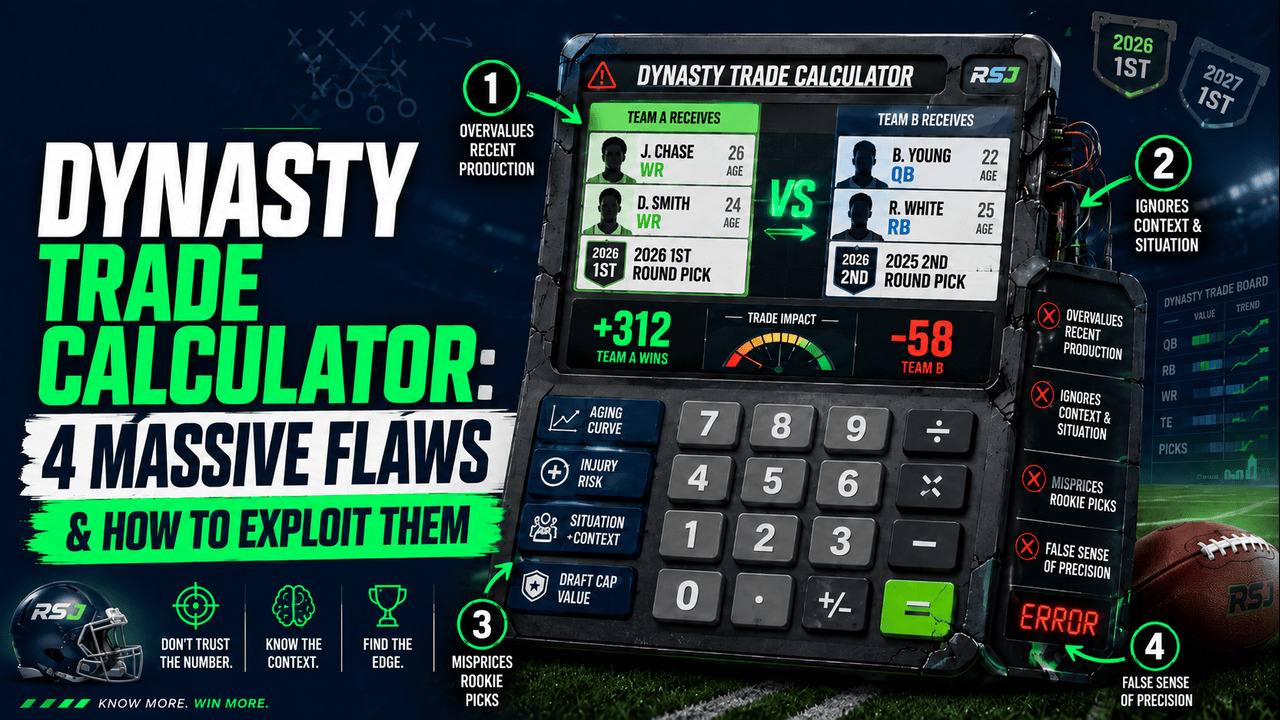
Many people sneer at the thought of anyone relying on a dynasty trade calculator. In reality, a huge portion of dynasty managers use these tools to develop deals and double-check offers so they don’t get railroaded. Choosing to use a dynasty trade calculator doesn’t make you inherently better at the game. However, understanding their purpose and their flaws definitely can.
Table of Contents
The Typical Dynasty Trade Calculator Mindset
Look around your dynasty league right now. Think about the guys who are constantly making trades but never actually holding the trophy at the end of the season. They pull up one of their favorite dynasty trade calculators. They plug in a bunch of names based on what their favorite YouTuber told them to “buy low” on. They fiddle with the pieces until the numbers turn green on both sides. Then they hit send with zero regard for the opposing team’s roster construction or direction. They feel justified in sending this type of deal because a website told them the deal was fair.
When their trade gets laughed at and denied, they inevitably send a screenshot of the calculator to prove it’s ‘fair.’ Sending a green KeepTradeCut bar after getting rejected is the dynasty equivalent of sending an unsolicited dick pic—nobody asked for it, nobody wants to see it, and it isn’t going to change anyone’s mind.
This is something that is very common with brand-new managers in the dynasty fantasy football world. Honestly, it’s just part of the growing pains for new managers, not necessarily an indictment on them as a person. We’ve all been the F.N.G. at one point in our dynasty careers.
This is the type of manager who always wonders why their roster has been stuck in the middle of the pack for half a decade.
Your lawn doesn’t look better than your neighbor’s just because you use a different lawn mower. There’s more that goes into it. Dynasty trade calculators do not win dynasty leagues. They too are just a tool. If you are using them purely as a scorecard to see who won a deal, you are potentially leaving insane amounts of value on the table. You are playing a completely different game than the guys who are actively building superteams.
We need to break down exactly why you are probably misusing these platforms, if you even use them. There are three main types of dynasty trade calculators out there. They all have massive blind spots. Once you understand those flaws, you can stop getting played by the machine and start weaponizing it against your league-mates.
3 Types of Dynasty Trade Calculators
Not all dynasty trade calculators are built the same. You have to know what is under the hood if you want to understand why a specific player is being overvalued or undervalued on a given day.
First, you have crowdsourced platforms. KeepTradeCut is the giant in this space. It’s what many novice dynasty managers gravitate towards when they consider making moves for their squad. These dynasty trade calculators measure public sentiment and vibes. The clear pro here is that they react instantly to news. An injury happens on a Sunday afternoon, and the values often shift before the game is even over.
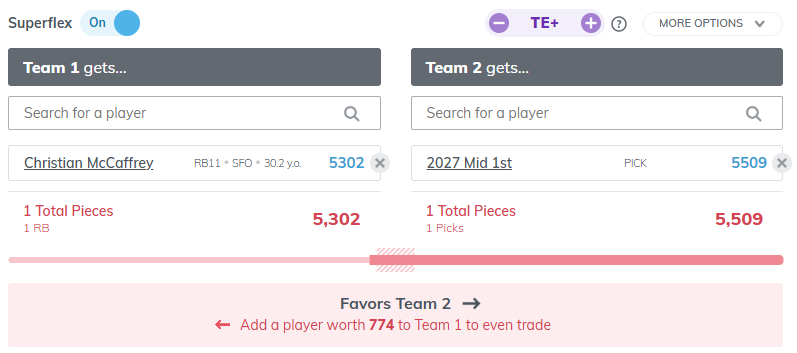
But the flaw is massive. A crowdsourced calculator is just a windsock driven entirely by recency bias. Crowdsourced valuation is pure market masturbation—a collective circlejerk over a 10-second clip of a third-round rookie running a route in shorts during OTAs. The public is horny for youth and recency, reacting with the emotional stability of a drunk college kid at 2 AM. A rookie drops a cool catch in training camp and suddenly his value spikes. It is noise masquerading as data.
Then you have trade-based calculators like FantasyCalc or Dynasty Dealer. These pull their data from actual completed trades across thousands of leagues. The benefit here is huge. You get to see the actual market-clearing price. You see what people are actually willing to pay when the rubber meets the road.
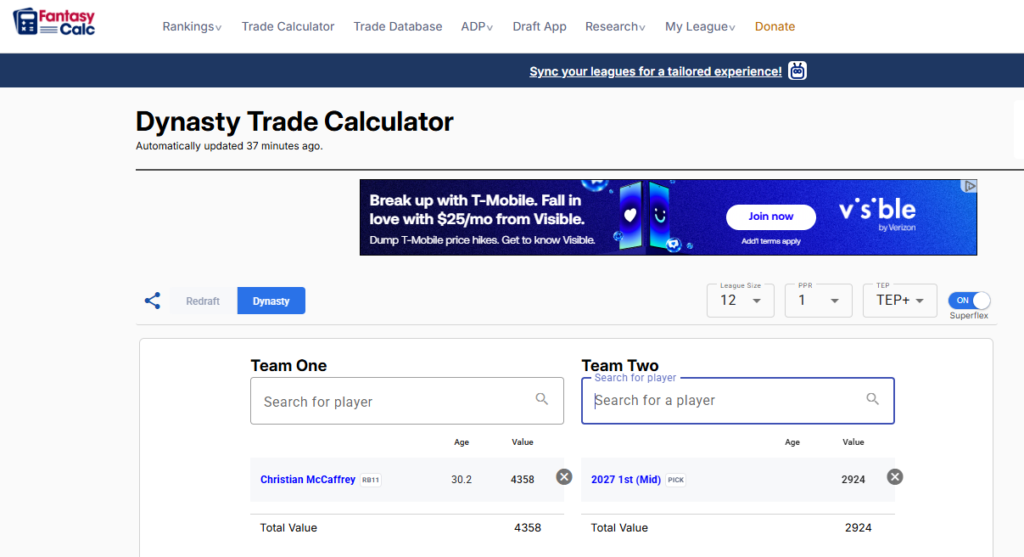
The downside? It lags behind breaking news. It requires real deals to execute before the values shift. If a starting running back tears his ACL in practice, a trade-based calculator is not going to reflect his true value drop immediately. It has to wait for people to actually trade him at a discount for the algorithm to catch up.
Finally, you have the expert and projection-based tools. Think of sites like DLF, RotoViz, and now the website I’m affiliated with – Dynatyze. These rely on analyst rankings and projected points. They are grounded in real analytics and structural models. The math is tight.
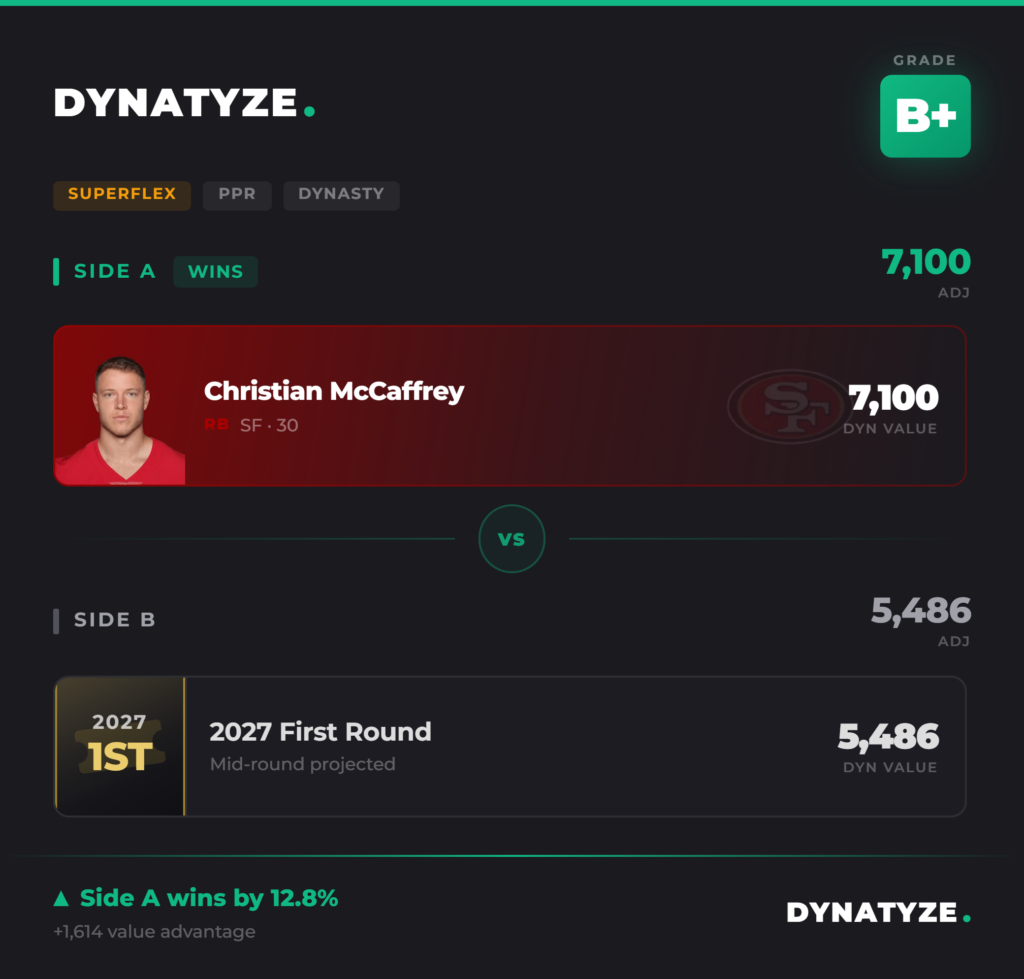
The problem is that they can be slow to update. More importantly, they might not reflect the actual trade economy of your specific home league. Your league might wildly overvalue quarterbacks or hoard draft picks. An expert model does not care about your league economy. It just cares about the baseline math.
The Consolidation Trap
The biggest flaw across all three of these calculator types is what I call the consolidation trap.
Plug a trade into almost any of these sites’ dynasty trade calculators. The dynasty trade calculator math will try to convince your league-mate that three bench-clogging WR3s equal one Justin Jefferson. Pitching a 3-for-1 package of roster bloat for an elite stud is like trying to trade three Steve Buscemis for one Sydney Sweeney at last call—no one is taking that deal.
Do not ever trade a dollar for four quarters. (Now, if you play in a massive Start 12 or 14-team league, depth carries real utility. But in standard Start 9 or 10 setups?) Elite assets break fantasy leagues. Depth only fills lineups.
Having a bunch of guys who score ten points a game is fine for surviving a bye week. It does not win you a title. When you get into the playoffs, you need the absolute hammers. You need the guys who can drop thirty points and single-handedly win you a matchup – even more so in shallower leagues.
Dynasty trade calculators completely miss this true leverage. They optimize for balance. They want the scales to be even. But superteams are not built on balance. They are built on overwhelming leverage at premium positions. If you are the one giving up the superstar, you almost always lose the trade in reality. It does not matter how green the calculator looks.
The Liquidity Problem
Most dynasty trade calculators also completely misprice liquidity. They assume all assets are created equal. They are not.
In real dynasty leagues, liquidity is leverage.
A future first-round pick is perfectly liquid. Everyone in your league understands the value of a first-round pick. You can trade it to a rebuilding team. You can trade it to a contender. It never gets injured. It never scores zero points on a Sunday. It holds its value and exponentially appreciates as you get closer to the draft. Just remember: liquid picks are leverage, not trophies. Draft picks don’t score points on Sunday, and hoarding them like dragon gold is how managers get trapped in endless rebuilds. The point of stocking up on liquidity is having the firepower to buy proven hammers when your championship window opens.
An old veteran running back, such as Tony Pollard, is incredibly illiquid. Even if the dynasty trade calculators say he is worth a late second-round pick, try actually getting that deal done in your league. Rebuilding teams want nothing to do with him. Other contenders might be set at the position.
Illiquid assets cannot be converted into leverage when you need them. You are stuck holding the bag. Your favorite dynasty trade calculator does not care. It just sees the projected points. It does not understand that you literally cannot move the player to half the teams in your league.
Macro Strategy and the Fake Loss
This brings us to the biggest issue of all. These tools completely lack context.
Winning a trade on paper is an actual failure if you acquire an aging veteran during what should be a rebuilding year for your team. You see this all the time. A novice realizes his team is bad, but thinks he can still contend. He starts selling off pieces. But he gets greedy. He sees a trade that heavily favors him on a calculator, so he takes it. He acquires a twenty-nine-year-old receiver who isn’t a true difference-maker and, to make matters worse, forfeited premium draft capital at some point, which could have secured him a better rookie pick.
Calculators are totally blind to the macroeconomic impact on your future draft capital. They cannot calculate Max Points For or what moves you plan to make next.
Popular dynasty trade calculators evaluate deals in a total vacuum. They can’t process overall context or the multi-step strategy you’re executing. For instance, when analyzing Christian McCaffrey’s dynasty value, a tool will flag selling an elite stud as a massive loss because it only sees raw point projections. It has no idea what subsequent moves that deal unlocks—like taking the return from CMC and adding a minor piece to grab a younger back with similar upside, like James Cook.
But let us look at the reality. Stripping those points from your roster lowers your floor. It pushes your Max Points For down. An example would be taking a discounted offer on an aging star—say, settling for an early 3rd instead of a late 2nd on Travis Kelce because your league market completely froze. Don’t burn equity for the fun of it, but in a tanking scenario, taking a minor paper loss to shed points is a massive strategic win if it guarantees you the 1.01 in the rookie draft. You just traded a depreciating asset for future liquidity and guaranteed yourself the best prospect in the class when other rebuilders are racing to do the same.
The calculator says you lost. The reality is you looked at the macro level of the trade beyond the calculator.
The Settings Blindspot: Superflex and TE Premium
One of the fastest ways managers get fleeced is by ignoring how their specific league settings break standard algorithms. Even when dynasty trade calculators offer toggles for Superflex or Tight End Premium (TEP), they routinely fail to capture true positional scarcity.
In a 12-team Superflex league, elite quarterbacks are the ultimate currency. Yet, if you plug a top-tier quarterback into most dynasty trade calculators, the math might suggest that three mid-tier wide receivers make it a fair swap. In reality? The manager holding Josh Allen, Drake Maye, or Lamar Jackson is never hitting accept on that package. The calculator sees equal points; it doesn’t see the positional monopoly.
The exact same blind spot exists in Tight End Premium formats. The algorithm might slightly bump up the value of a tight end to account for the extra half-point per reception. But basic dynasty trade calculators cannot quantify the massive tier breaks created by difference-makers like Brock Bowers or Trey McBride in a 1.5 TEP format.
If your league-mates blindly follow the base outputs of their favorite dynasty trade calculators in these specialized formats, exploit it. Use the tool to establish a baseline, but apply your own “scarcity tax” for premium positions to win the deal in reality.
The Blueprint for Elite Process
So how do we actually use these things? We do not ignore them. We weaponize them.
Step one is identifying your specific league-mate’s preferred dynasty trade calculator. In most leagues today, this is going to be KeepTradeCut. Find out what your league uses as its gospel. A smart manager won’t give this willingly, but I’ve found many do if you ask the right questions.
You need to realize that you are not negotiating with a calculator. You are negotiating with human bias. The calculator is just the language your trade partner speaks. If you want a much better chance of a deal being accepted, you frame the offer so it looks completely fair on their platform of choice. You use their own tool to justify the trade.
Step two is exploiting the gaps.
This is where the real edge is found. You need to find players who are valued incredibly high by pure vibes on crowdsourced sites but grade much lower on your objective evaluation models. Sell those players for value immediately. Let someone else pay the hype tax. An example today would be selling high on Cyrus Allen or De’Zhaun Stribling, as their value has begun to peak after great camps and preseason. Last year, this would have been someone like Kyle Williams. There are always guys who gain hype in the preseason who flame out in the actual season. Obviously, some also do well, but that’s what we have models for. There are people who traded a 2027 1st for Stribling, which would be a ridiculous smash accept every time.
On the flip side, target players that your data models love but the public completely fades. Maybe it is a guy who had a quiet rookie year, but his underlying metrics show elite separation and target-earning ability. The public writes him off as a bust. The models show a breakout is coming. Weaponize those valuation differences. Trust the process over the specific players.
Step three is accounting for your own roster space and draft leverage.
Before you make any move, you have to map out how the points leaving or entering your roster will alter your final draft position. You have to think multiple steps ahead. Many fail to do this.
The ultimate rebuilding asset in dynasty fantasy football is the 1.01. It is not a perfectly balanced green bar on a trade website. The 1.01 dictates the entire draft. You can take the generational prospect, or you can auction the pick off for an absolute haul of assets.
Dynasty trade calculators are not the economy. Your specific league is the economy.
You need to use calculators to package a deal. You should never use them to decide one. They are not your starting point. In an ideal world, you build your foundation on objective prospect models. Build it on hard data, reliable film study, and an understanding of your league’s macro environment.
Stop trying to win trades on paper. Stop chasing balanced deals. Let the rest of your league stare at the numbers. Go build a superteam based on leverage.
Building a dynasty superteam takes more than a dynasty trade calculator—it takes understanding the market context. For more deep-dive analytics and unfiltered process advice, follow Tyler Sutphen on X @dynastydwarf. Let’s exploit the market together!