2026 Fantasy Baseball Starting Pitchers – FIP the Market
Success in 2026 fantasy baseball starts with knowing which 2026 fantasy baseball starting pitchers are poised to rise — and which are set to stumble. By evaluating advanced metrics like Fielding Independent Pitching (FIP), Expected Fielding Independent Pitching (xFIP), strikeout and walk rates, Home Run to Fly Ball Percentage (HR/FB%), and velocity trends, fantasy baseball managers can identify the Market Movers ready to outperform expectations and the Market Crashers likely to regress.
In a season where pitching roles, batted-ball profiles, and strikeout trends shift rapidly, leveraging this insight and these advanced fantasy baseball pitching metrics is what separates a championship-caliber staff from the rest.
How We Identify Fantasy Baseball Market Movers & Market Crashers
Every 2026 fantasy baseball starting pitcher’s value goes far beyond ERA and wins. By analyzing FIP and xFIP alongside strikeout rate, walk rate, HR/FB%, and velocity trends, we can get a clearer picture of a pitcher’s true performance level.
FIP helps isolate outcomes a pitcher can control — strikeouts, walks, and home runs — removing defensive noise, while xFIP adjusts for unusually high or low home run rates to show what a pitcher should have allowed. Using these metrics, we can identify the true “Market Movers” poised to outperform expectations and spot hidden “Market Crashers” whose underlying peripherals suggest regression and potential draft-day disappointment.
2026 Fantasy Baseball Starting Pitcher Breakouts and Sleepers – Market Movers
True breakout arms aren’t always obvious from ERA or wins alone. These 2026 fantasy baseball starting pitchers show underlying skill growth — from rising FIP/xFIP trends to improved strikeout and swinging-strike rates — suggesting they could outperform expectations in 2026.
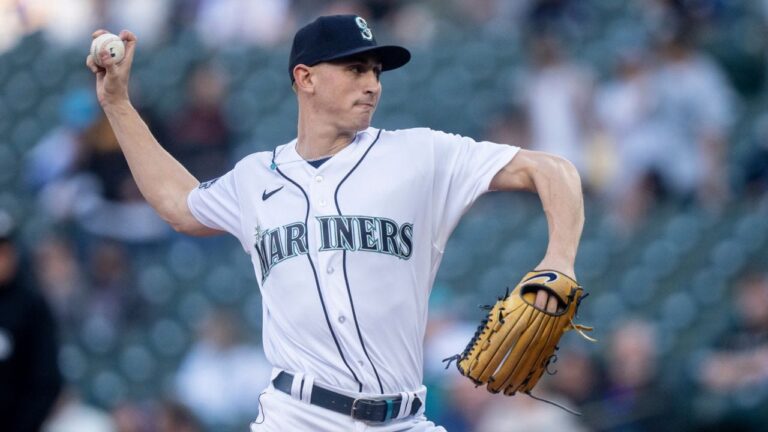
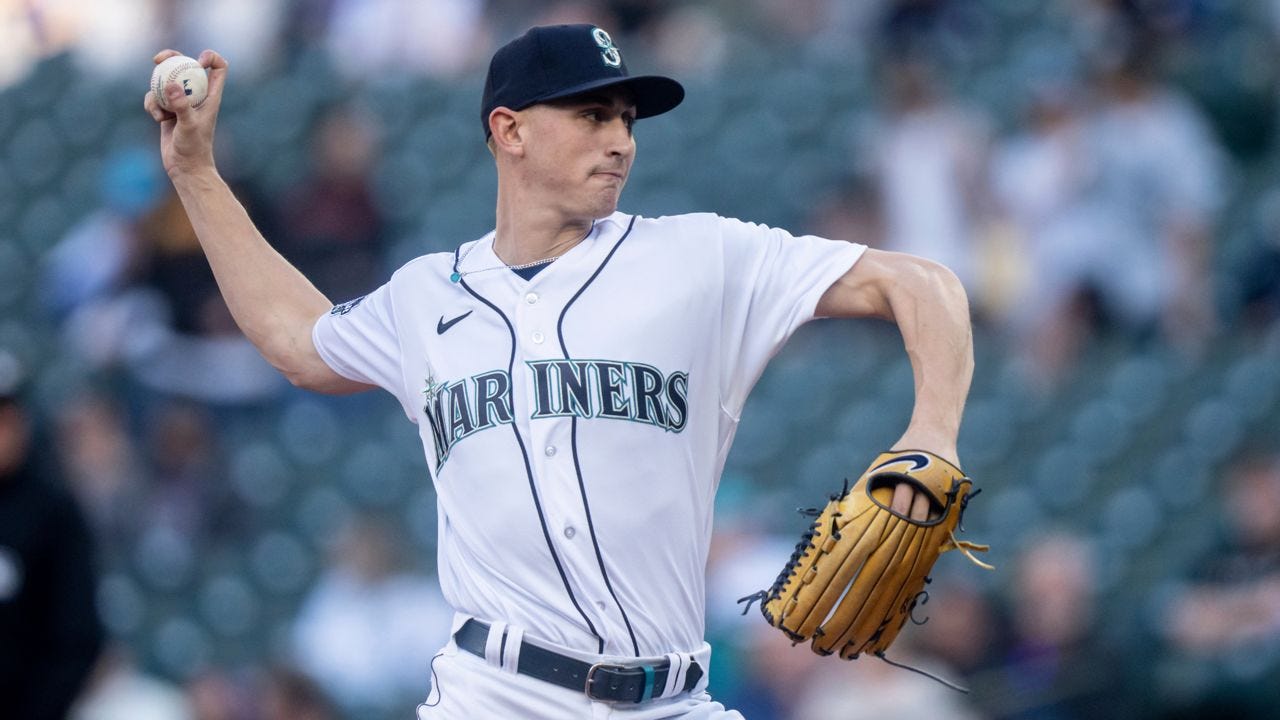
George Kirby, SP, Seattle Mariners
Seattle Mariners’ George Kirby looks like a classic Market Mover for 2026 fantasy baseball starting pitchers. Still just 28 years old and firmly in his prime, Kirby benefits from pitching his home games at T-Mobile Park — one of the most pitcher-friendly environments in baseball. In fact, Baseball Savant ranks T-Mobile Park dead-last in “Park Factor” (91) due to its deep dimensions and pitcher-friendly conditions, meaning opposing hitters will struggle to produce during Kirby’s home starts. This gives Kirby built-in run prevention support.

After beginning 2025 on the IL with shoulder inflammation, Kirby posted a 4.21 ERA that may scare off some managers, but the underlying metrics tell a much different story. Kirby finished the 2025 season with a 3.37 FIP and the highest strikeouts-per-nine rate of his career, signaling that his skills actually improved despite the inflated ERA.
Prior to 2025, Kirby had started at least 25 games in three consecutive seasons and never posted a FIP above 3.34, demonstrating both durability and consistency. If the shoulder issue is fully behind him, Kirby’s combination of elite command, improving strikeout upside, and a favorable home park make him a strong rebound candidate and a prime Market Mover heading into 2026 drafts.
At his current 5th/6th round ADP, Kirby is an absolute bargain. Based on his underlying skills, Kirby profiles more like a top-3 round pick and a top-10 starting pitcher. While drafters are letting him slide outside the top 15 SPs, savvy managers can capitalize by targeting him several rounds later than his true value, effectively gaining premium pitching production at a mid-round cost
Eury Pérez, SP, Miami Marlins
Miami Marlins’ Eury Pérez remains one of the most electric young arms among 2026 fantasy baseball starting pitchers. Pérez burst onto the scene in 2023 at just 20(!!!!!!) years old with a 10.64 K/9 and a sparkling 3.15 ERA, immediately flashing frontline upside. After missing all of 2024 recovering from Tommy John surgery, Pérez returned in 2025 and didn’t miss a beat, posting a 9.91 K/9 with a 3.67 FIP and an even more encouraging 3.24 xERA.
Perez’s surface numbers may not fully reflect it yet, but his underlying metrics confirm that his swing-and-miss stuff is intact. With youth firmly on his side and elite strikeout upside backed by strong expected indicators, Pérez profiles as a high-ceiling Market Mover who could take another step forward in 2026.
At his current 8th–10th round ADP, Eury Pérez represents one of the biggest bargains among 2026 fantasy baseball starting pitchers. Based on his strikeout upside and underlying metrics, Pérez profiles more like a top-5 round pick and a top-15 starting pitcher. While many managers are overlooking him, drafters can capitalize on his elite upside, securing a top-tier starting pitcher at a bargain price well below his true value.
Sandy Alcantara, SP, Miami Marlins
If Eury Pérez represents the future of the Marlins’ rotation, Sandy Alcantara is the proven ace working his way back to form. Like his teammate, Alcantara missed 2024 recovering from Tommy John surgery, but the former 2022 Cy Young winner showed in the second half of 2025 that his elite ceiling remains intact.
Still just 30 years old, Alcantara rebounded from a rocky start in 2025 to post a 3.33 ERA over his final 13 starts while holding opponents to a .218/.636 slash line. The early-season struggles may linger in draft rooms, but the second-half dominance is a reminder of his frontline profile. With regained command, durability history, and true workhorse upside, Alcantara has all the ingredients to reestablish himself as one of the top 2026 fantasy baseball starting pitchers — making him a clear Market Mover heading into draft season.
At his current ADP outside the top 40 starting pitchers and beyond the 10th round, Sandy Alcantara is flying under the radar. His underlying metrics profile him as a top-5 round starting pitcher in fantasy drafts that can be a reliable SP2 or SP3 on your fantasy squad. With most drafters overlooking him until the later rounds, smart managers can secure a potential frontline starter well after the early picks, upgrading their rotation without sacrificing valuable draft capital.
2026 Fantasy Baseball Starting Pitchers Busts and Decliners – The Market Crashers
Under-the-radar red flags can turn promising arms into draft-day disappointments. These 2026 fantasy baseball starting pitchers show warning signs in key metrics — rising FIP and xFIP, declining strikeout rates, increasing walk rates, and home-run susceptibility — signaling regression and limited fantasy value. Avoiding these Market Crashers is key to protecting your fantasy baseball roster.
Jacob deGrom, SP, Texas Rangers
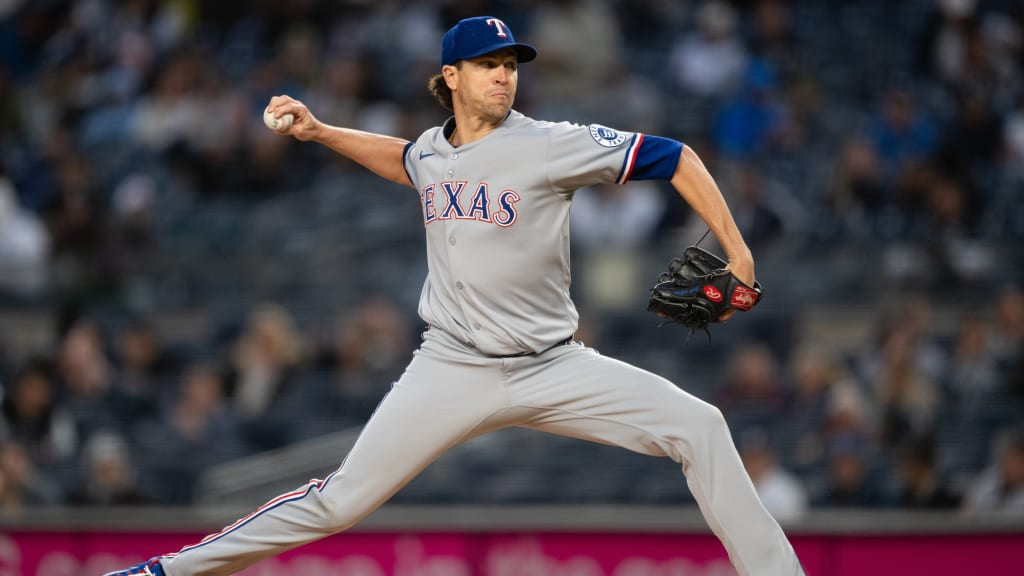
No one questions the greatness of Jacob deGrom — he’s one of the most dominant pitchers of his generation. That said, entering his age-37 season (turning 38 in June), deGrom posted his lowest K/9 since 2016 and a career-high 3.64 FIP in 2025, along with the worst HR/9 of his career.
Always an injury risk — particularly at this stage of his career — Jacob deGrom is being drafted among the first 10–15 pitchers off the board, yet his upside no longer justifies that premium. Based on advanced metrics, health concerns, and age-related decline, deGrom profiles outside the top 25 starting pitchers and doesn’t warrant top-4 round draft capital. For managers building a rotation of 2026 fantasy baseball starting pitchers who prioritize consistent, high-end production without regression risk, deGrom is a classic “Market Crasher” — a high-cost pick whose historical pedigree masks current limitations.
Luis Castillo, SP, Seattle Mariners
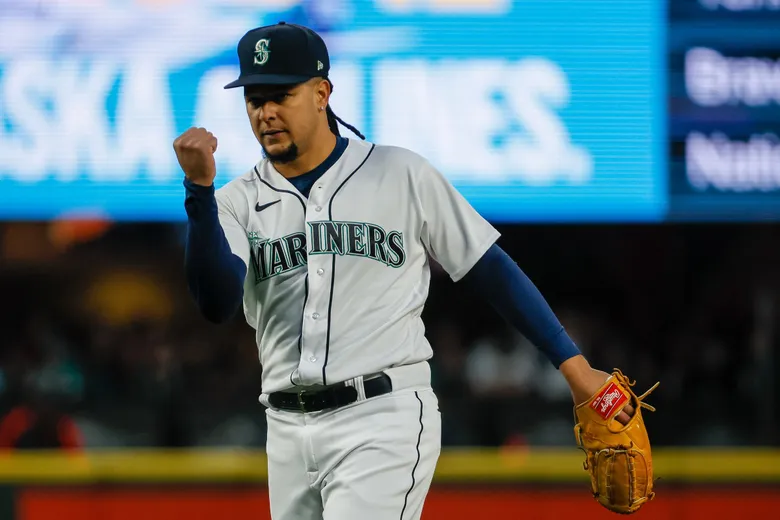
Seattle Mariners’ Luis Castillo enters his age-33 season as a cautionary pick among 2026 fantasy baseball starting pitchers. After two straight seasons of declining strikeout rates, Castillo posted a career-low K/9 in 2025, dipping to just above 8, signaling that his swing-and-miss stuff may be fading.
While being drafted around the 10th round, Luis Castillo offers very little upside relative to even modest expectations. Despite finishing 2025 with a 3.54 ERA, his underlying metrics tell a different story: a 4.04 xERA and 4.09 xFIP suggest his surface results outperformed what the peripherals indicate, making regression likely. Declining strikeouts, rising expected runs allowed, and age all point to limited ceiling moving forward. Castillo is unlikely to deliver meaningful impact, making him a pick to avoid if you want your rotation to reach its potential in 2026.
Shota Imanaga, SP, Chicago Cubs
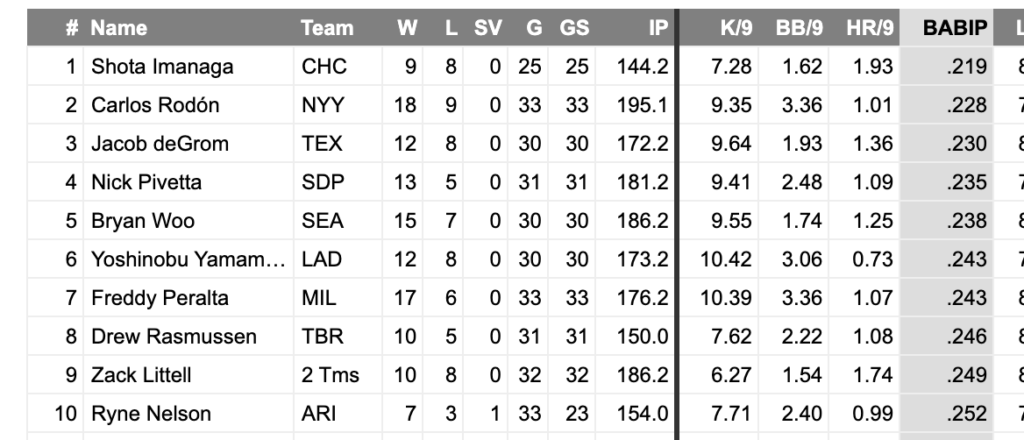
Chicago Cubs’ Shota Imanaga looks like a risky 2026 fantasy baseball starting pitcher pick. His strikeout rate dropped to just 7.28 K/9 in 2025, well below his 9.03 K/9 debut in 2024, suggesting hitters are becoming more familiar with him. While Imanaga held opponents to a league-low .219 BABIP in 2025 for starting pitchers with at least 140 innings pitched, he still managed to post a mediocre 3.73 ERA (and his 4.86 FIP indicates underlying struggles that could lead to regression).
The elevated home run rate is particularly concerning at hitter-friendly Wrigley Field during summer months. For fantasy managers, Imanaga represents a classic Market Crasher — his surface stats may mask real risks, making him unlikely to provide consistent rotation value in 2026. I very much prefer upside pitchers like Shane Baz, Jack Leiter, and Casey Mize, who are being drafted multiple rounds later than Imanaga’s 12th round ADP.
Final Thoughts on 2026 Fantasy Baseball Starting Pitchers
Building a winning 2026 fantasy baseball starting pitching staff means identifying breakout arms while steering clear of the pitchers poised to regress. Key advanced metrics like FIP and xFIP allow us to “pop the hood” on ERA and Wins, and get a clearer picture of how a starting pitcher is truly performing.
Leveraging these insights on Market Movers and Market Crashers will help you construct a rotation that delivers consistent production all season — giving you the edge in your 2026 fantasy baseball draft.